
Start using a calendar. Don’t just own a calendar – open it up and use it! It doesn’t matter if it is paper or electronic, big or small. This space is for items that have a fixed date or time period attached to them. Check it daily!
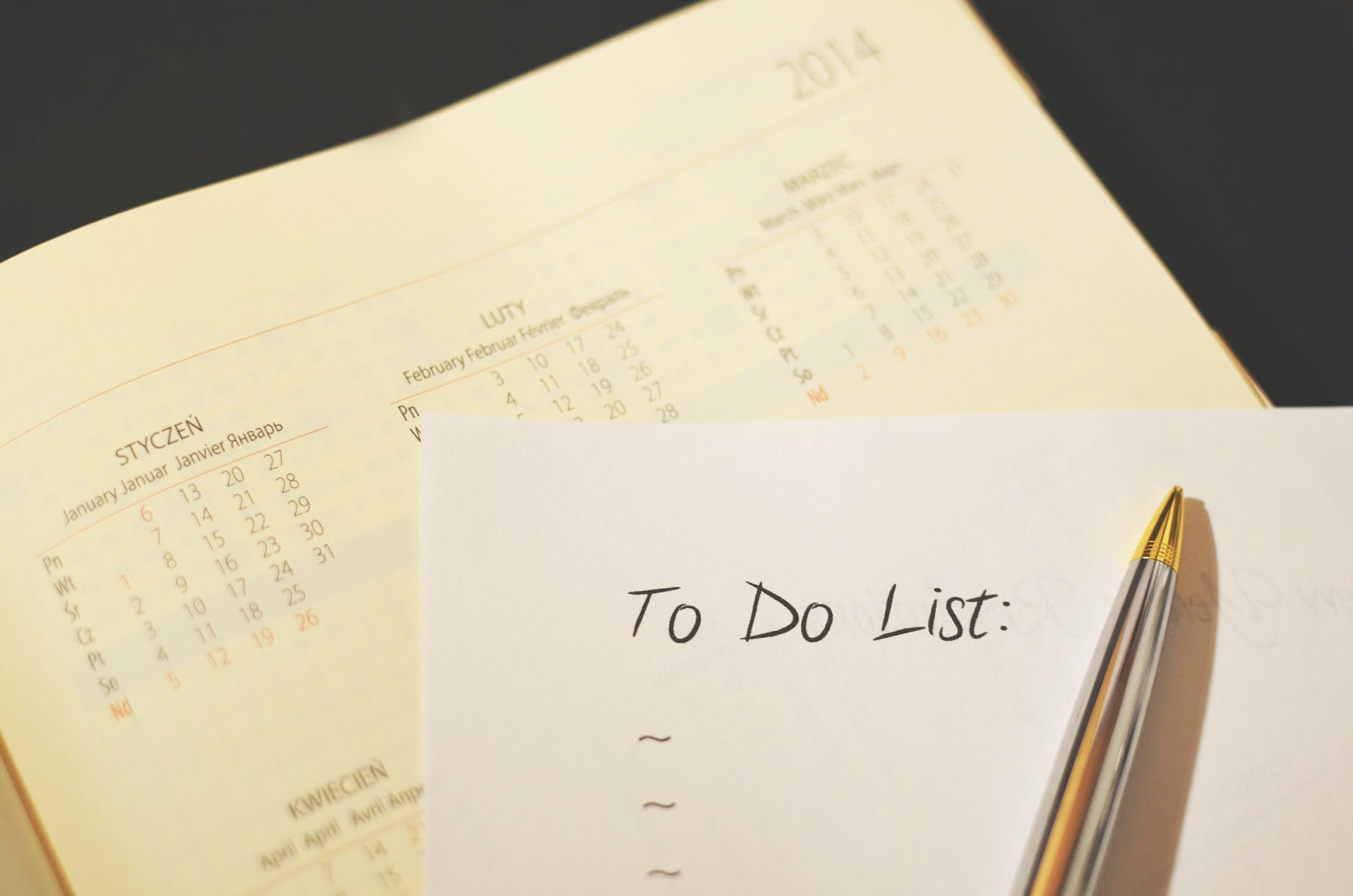
Don’t keep your to-do list on the calendar. It is too easy to have items get lost or burden the day. Do schedule blocks of time to work on items that may be on your to-do list. Not keeping your to-do list on the calendar builds flexibility, so when you can’t devote 2 hours to yard work, the yard work still stays on the to-do list, but you can re-arrange your calendar as needed.

To schedule blocks of time, use a daily calendar with hour designations instead of just a monthly calendar that may only have small squares to write in. Block out time that is already scheduled or unavailable to better assess what spaces you have flexibility or control over.

When scheduling build in buffers. This is deliberate extra time it may take to get a task done. Studies show we are bad at determining how much time it will take to do something, often not scheduling enough time. It’s the joke that a home improvement project will take five extra hours and three extra trips to the hardware store.
Make sure to build buffers into the time it takes to travel from places and appointments on your calendar. Practice arriving a bit early to things. This will do a great deal to reduce your stress.

Make sure to schedule some free time for yourself. I recommend with a minimum of a 2-4 hour chunk of time per week. I call this play time, but it’s really free style time – space for you to do whatever you want without guilt; the one caveat is that what you do cannot be something on your to-do list. If you find this hard – start keeping a brief journal or list of the things you fill this time with. Look for patterns and think outside the box.
I am pleased to share a few pages of my play journal through my art website.
For more information on play time as stress management I recommend listening to the podcast episode 01 of Everything Creative (Mark Henderson interview), and Brene Brown’s lecture series The Power of Vulnerability.
 Be Prepared Seattle