Good work flow management, and thus stress management, includes taking time to review. This includes both reviewing the recent past and how things are going, as well as taking time to look at what is coming up on the calendar and defining steps that need to happen to finish projects, get work done, build in stress management buffers, and achieve your goals. Reviewing should also include a review of how you have been feeling and functioning.

REVIEW: PAST – in Greg McKeown’s book Essentialism he suggests the activity of reviewing the past 90 days to view the relationship and value of what you have been filled your time and schedule with. He suggests to focus on the broader details, the trends, or “headlines.” This helps to sort out what is important and what is not – to see the cumulative effect of your actions. This review helps to clarify focus and better define the big picture of where you are heading. This review activity aids in making course corrections as you sit and look at the future. For example, do you need to schedule more down time, prep time, or be more savvy in chunking down the steps on that next big project so you can get it done on time without stressing.
Keeping a daily journal can aid in this review activity, and also helps to process the thoughts and feelings of the day. Entries do not have to be long or loud – just a few sentences is enough. Once every 90 days or so sit down for an hour and review your entries.

REVIEW: FUTURE – You may wonder how you review something that hasn’t happened yet. Think of this as not just looking ahead to see what’s on your calendar, but as thinking through what you know is coming up to define the work that needs to be done. A common example of this is a busy family sitting down on Sunday night to review the events on the calendar for the next week and discuss what may need additional prep before the day-of. Corporations do this all the time in project planning meetings.
Define your work over the next 90 days – Print out blank paper month calendars for the next three months. Mark out major events on this calendar – maybe out of town time, time off, deadlines, meetings, speaking/teaching assignments, appointments, birthdays or social events, etc… Lay all three pieces on the table and look for the overall trends. Are there busy sections? How might you need to modify your usual schedule during this time? How might you need to take the week or two before, and even after, to make sure you are not burned out by the increased busy-ness.
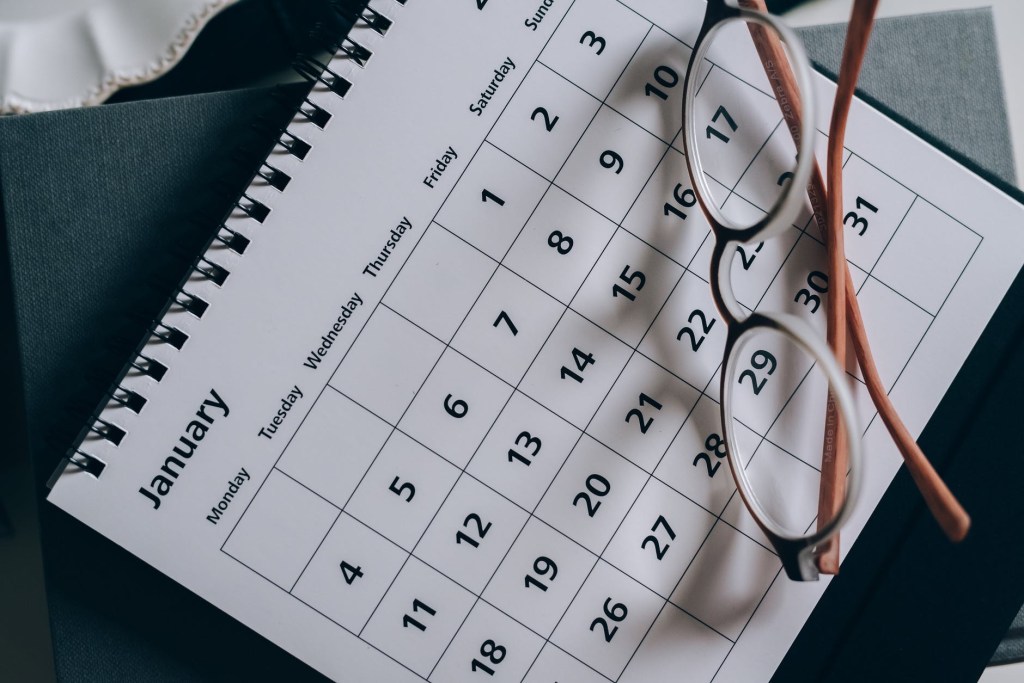
For example, if I have a heavy week coming up, I am going to modify my meal planning and food prep to be easier. I’m going to make recipes I know and am familiar with that take little effort and contain ingredients I can buy 2 weeks in advance. I also know I am going to plan a healthy way to permit me to take a few more eating out opportunities than usual.
Or if I have meetings and social engagements 4 out of the 5 days of my work week I’m going to hold the one free night as not only a night at home, but a chore free night too. This helps me recharge and not get burned out.
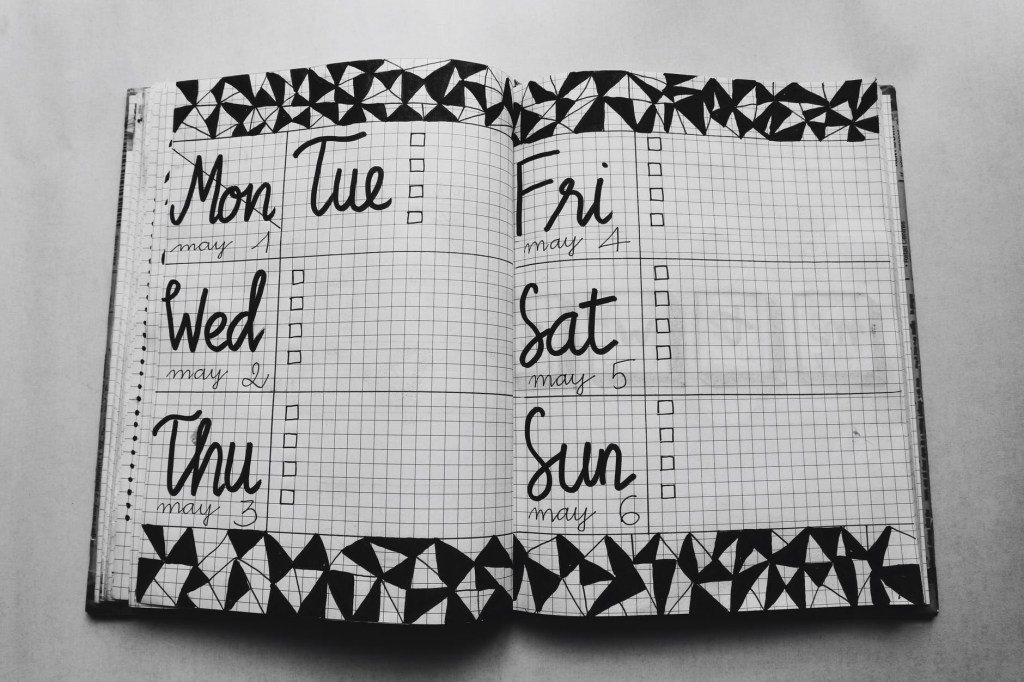
Define your work for the week – this is the most common picture that comes to the mind when you talk about defining your work. It’s much more of a calendar review than looking for larger trends. It is a good way to spot what areas are open in the schedule and what is not. It is also a good time to think about if you want to schedule chores to get done during the work week (and thus free up the weekend), or if it is one of those weeks where the chores are going to have to be on the weekend (so don’t plan anything else and adjust your expectations accordingly!).
Define your work for the day – This is much less common. I am talking about getting down to an hour by hour review of your time and how you use it. As you might imagine, this takes some effort. You may wonder why all this effort is recommended in a stress reduction post. Well, it has to do with productivity. Defining your work and time allows you to clump like tasks, keep tasks focused, and free up whole blocks of time for play and renewal rather than just moments snatched through a smart phone app that will make you feel guilty later anyways.
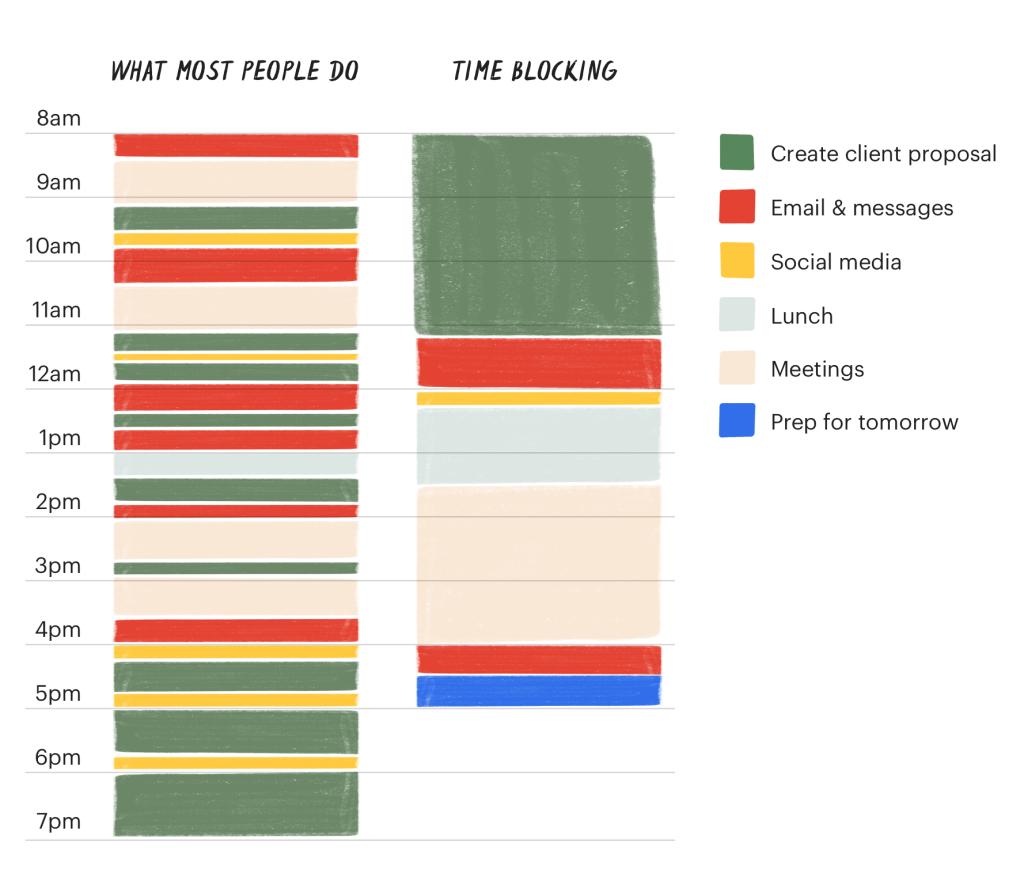
The best system I know to define your work daily is the time-block system. This is one of the main pillars in Cal Newport’s deep work philosophy (and book by the same name). He does a good job explaining how to maintain flexibility in your schedule as needed throughout the day while still using a time-block system.
I am not going to explain how to do time-blocking in detail here, but I do recommend an excellent introduction post by Todoist. Below is a visual picture from this post that illustrates how time blocking can be helpful:
 Be Prepared Seattle