Those immediately around you will be your best asset and resource if a major natural disaster strikes. Getting to know who these people are and how they are willing to help before a natural disaster will greatly ease your experience with the unexpected.
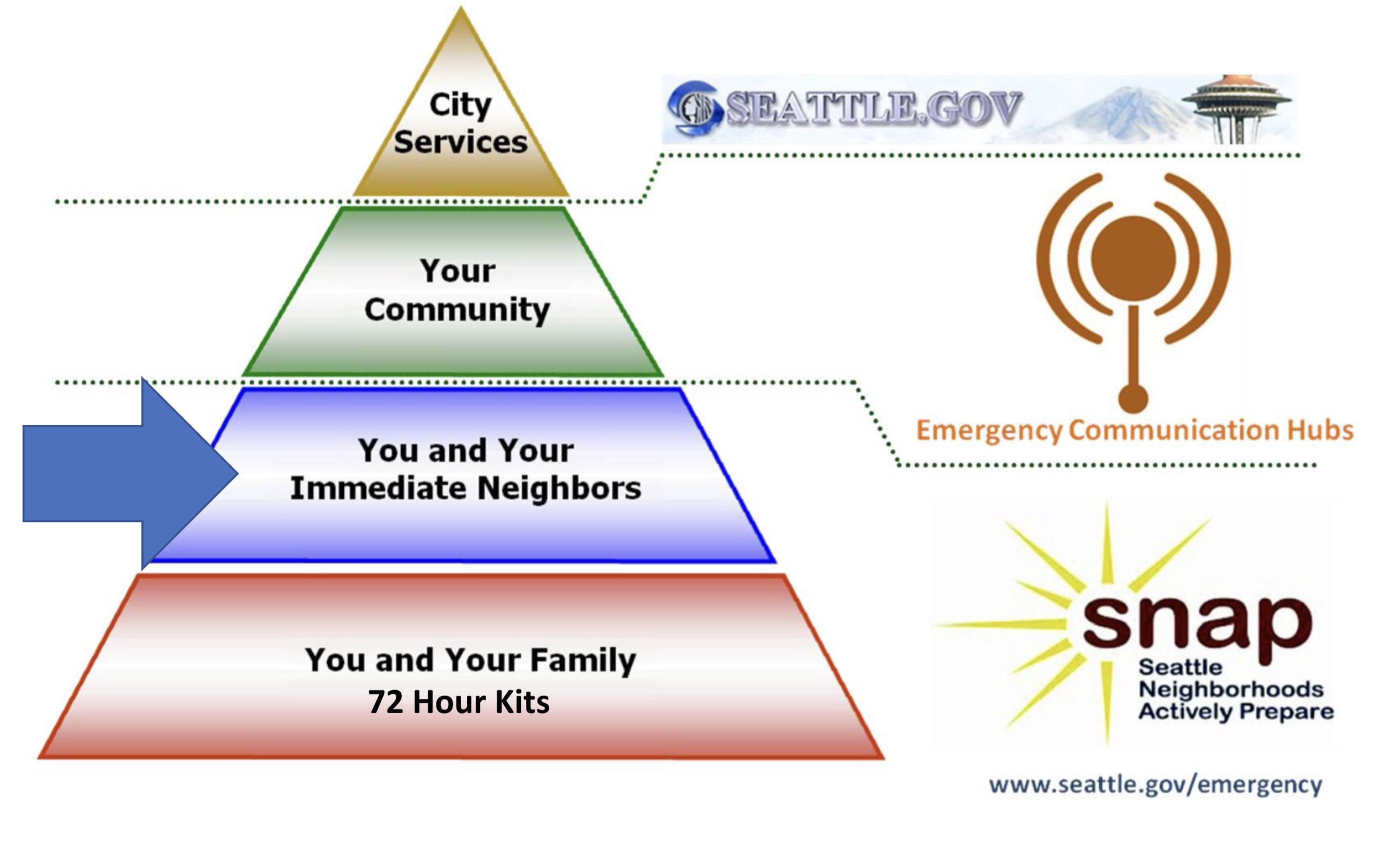
The City of Seattle has a PDF workbook designed to take inventory of your neighborhood, street, or apartment building and see who has what resources and would be willing to help (or might need extra help) in an emergency. These self-organized neighborhood groups are called SNAP groups (an acronym for Seattle Neighborhoods Actively Prepare).
How do you get to know your neighbors? Here are a few suggestions
– Start by saying, “hi.”
– Walk your neighborhood often and say “hi” to those you see.
– Get a dog. In all seriousness, especially in Seattle, walking with a dog helps break the ice when talking with those you see in your neighborhood.
– Welcome those that move in – bring a housewarming gift.
– Hold your own housewarming party and invite everyone.
– Use holidays as an excuse – I have used this to great effect at Christmas time. Get with a friend and deliver cookies to your neighbors. Introduce yourself and share some holiday cheer.
– Drop off letters introducing yourself (also easier to do during the holidays.).
– Host a neighborhood party – either a block party, or invite folks to come to your home. This is one of the main ways I’ve been able to get to know my neighbors: I received a generous invitation to a long-held tradition of an annual Halloween neighborhood party.
– Look for opportunities to serve those around you. Yard work is a good opportunity, or shoveling snow off of sidewalks/driveways (although that might not be very frequent in Seattle).
– If you live in an apartment building see if there are building wide activities. Make sure you are on the building-wide email/notification list. If neither exist get involved to help create a sense of community in your building.
– Go to local community events, such as a farmer’s market or parade. See who is around. See if you can help out at the local P-Patch or garden.

Remember getting to know your neighbors takes TIME. It takes multiple exposures of seeing a face, hearing a name, making the connection of where you live, seeing what you have in common, etc… Keep at it and don’t forget to chat to your neighbors about emergency preparedness too. Maybe even share this website!
 Be Prepared Seattle