The feelings we have, or our emotions, are the most common thread that binds the human family. Yes, the paths to feeling happy, sad, or angry are many and vary person to person; but the names of these feels are universal. If I am feeling happy, I am feeling happy, and the same goes for others.
This post is not on how to be happy, or how to minimize emotions we do not like. It is on how to build emotional resilience, that when an emotional disaster hits you can lead from a place of strength. Some of this strength comes from practicing seeing things as they really are – including our relationships to others. If you haven’t already, please check out the SOCIAL HEALTH section of this website for more on relationships.
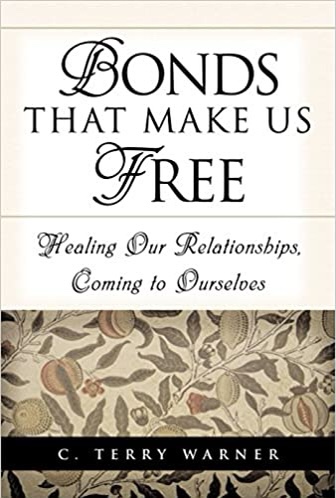
Book Recommendation: Bonds That Make Us Free by C. Terry Warner. Learn how to not self-rationalize and better be aware of how to love and forgive those around you. Bonds That Make Us Free teaches a great skill set to relieve the emotional baggage that so easily creeps into our relationships, and the motivations/actions within those relationships.
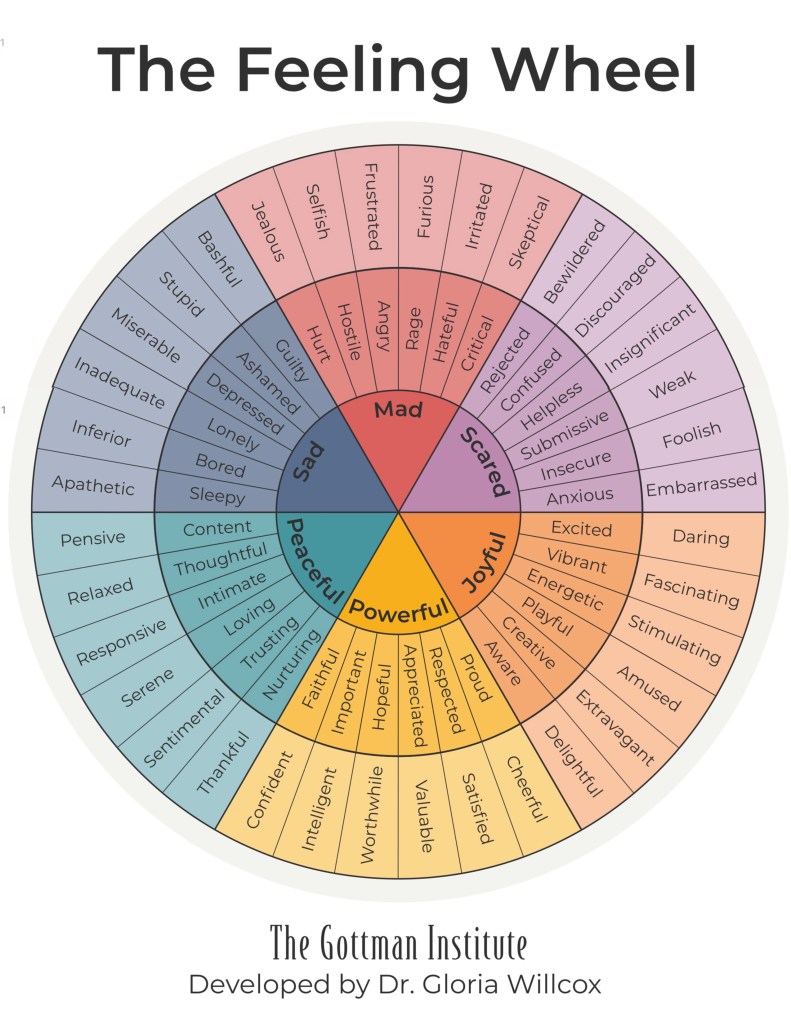
The Gottman Institute has provided this excellent example of a Feeling Wheel. Just like a color wheel or a flavor wheel, this visual offers a variety of words to help label or describe what you are feeling.
We all have times when we feel like we do not have any control over our emotions. The reality is that we have more control than we think. Mindfulness can be a helpful skill for staying in the moment and not being swept away by our feelings (an example of this is the exercise noting). Identifying and reacting to emotions in a constructive way takes practice. If you feel like your emotions have too much control in your life too much of the time, then you may benefit from establishing care with a therapist.
Cognitive behavior therapy (CBT) is designed to help identify emotions and how they are affecting behavior. For example, CBT teaches taking a moment to fact check your own feelings/thoughts before acting on them. The visual guide below is an example of some ways we commonly distorts our thoughts and feelings.

Depression
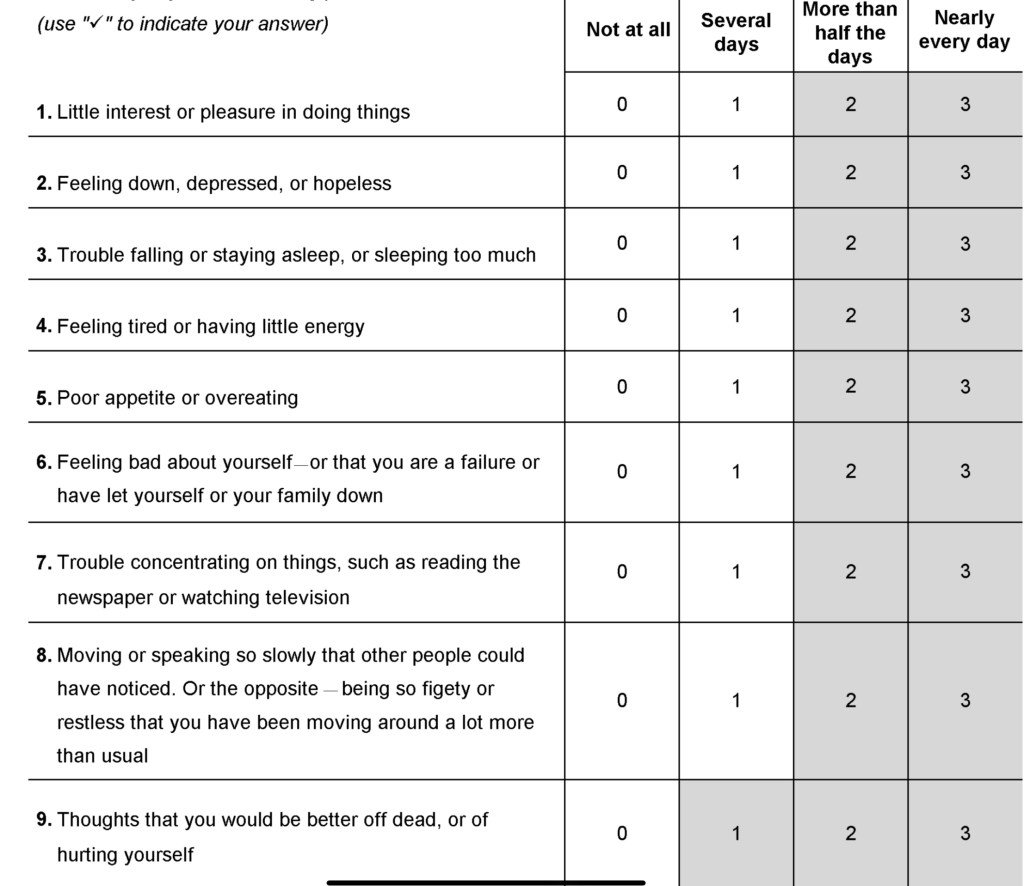
Sometimes you may find that it is hard to feel anything, or it is a struggle to have any happy or positive thoughts. This deadening of emotion can be a sign of depression. Clinical depression is a serious condition that can be managed with professional help. Please talk to your doctor or therapist if you think you are experiencing depression. If you are unsure if what you are feeling is considered depression, the PQH-9 screening questionnaire for depression is a very common tool used in the healthcare industry. Below are the questions asked, and the link provides the sheet on scoring.
Anxiety
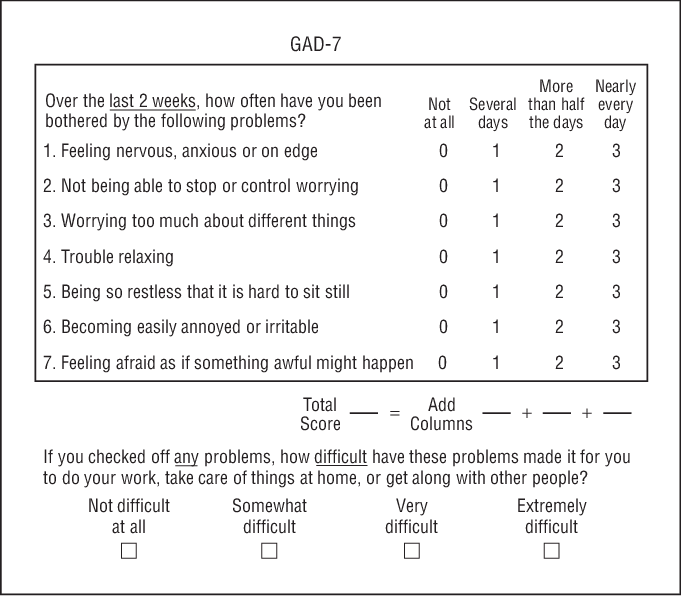
Anxiety is becoming more and more prevalent in our society, and it is not uncommon to see the GAD-7 screener for anxiety administered at the same time as the PQH-9. Here is an electronic version of the GAD-7 including scoring.
Addiction – not numbing out

For various reasons individuals may want to numb their emotions, or seek unnaturally altered emotional experiences through what they take into the body or mind. We do this all the time – for example having a bad day and needing a soothing dose of cookies and ice cream; or watching a certain movie because of the emotions we feel when watching it.
One way addiction starts is using strong body-harming substances (think recreational drugs or excessive alcohol consumption) to escape unwanted emotions. These substances create an altered sense of consciousness which disengages certain centers of the brain (decision-judgement centers), and activates others (such as the pleasure-reward center). Addiction can also start from a desire to create a certain set of emotions, such as sexual arousal when viewing pornography.
Because addiction involves the pleasure and reward centers of the brain, addiction comes with cravings and compulsions. While there is a spectrum of how, “addicted,” someone is to a substance or behavior, all addictions involve a desire to change the way one feels. While an addiction may start of gradually, if not treated, it will eventually escalate to the point where the person involved is no longer able to maintain control over the cravings or behavioral compulsions.
Common hallmarks of addiction include: craving, temporary relief for pleasure, compulsivity (inability to stop despite negative consequences), and tolerance (original levels of consumption are not enough to satisfy the craving).
Read More – Article: Beyond Drugs, The Universal Experience of Addiction. by Dr Gabor Mate.
Breaking an addiction requires help. There are many resources available to start the steps needed to break an addiction.

Alcoholics Anonymous (AA) is a well known group offering free community based support groups, and support groups for friends and family members effected by alcoholism in their relationships (Al-Anon). AA and Al-Anon have been so successful that there are many mirror groups such as Narcotics Anonymous and Nar-Anon, etc…
Alcoholics Anonymous uses a 12 Step Program, which has been modified to treat a variety of addictions and subsequently has spread widely through the addiction recovery world. Below are the 12 steps to breaking addiction as created by Alcoholics Anonomous:
- We admitted we were powerless over alcohol–that our lives had become unmanageable.
- Came to believe that a Power greater than ourselves could restore us to sanity.
- Made a decision to turn our will and our lives over to the care of God as we understood Him.
- Made a searching and fearless moral inventory of ourselves.
- Admitted to God, to ourselves and to another human being the exact nature of our wrongs.
- Were entirely ready to have God remove all these defects of character
- Humbly asked Him to remove our shortcomings
- Made a list of persons we had harmed, and became willing to make amends to them all.
- Made direct amends to such people wherever possible, except when to do so would injure them or others.
- Continued to take personal inventory and when we were wrong promptly admitted it.
- Sought through prayer and meditation to improve our conscious contact with God as we understood Him, praying only for knowledge of His will for us and the power to carry that out.
- Having had a spiritual awakening as the result of these steps, we tried to carry this message to alcoholics and to practice these principles in all our affairs.
Addiction Recovery Support Group Meetings – very similar to the 12 step program of AA, but designed to help with any addiction, these are free community based support meetings offered by The Church of Jesus Christ of Latter-Day Saints to anyone who would like to participate. The divine power of Jesus Christ and his love play a role in finding help in breaking addiction. Find a meeting or read more about the program here.
 Be Prepared Seattle