
This goes without saying – the first line of defense is making sure stuff doesn’t fall on you… When you think of an earthquake, don’t think about buildings collapsing, think about all the unsecured items in the room that are now flying around. That is why a big part of earthquake emergency prep is securing items in the home.
The goal during an earthquake is within 3-4 seconds getting to an earthquake safe place:
- Under a table or desk
- Beside a heavy piece of furniture (not bookcases)
- Beside an inside wall
- If in bed, stay in bed
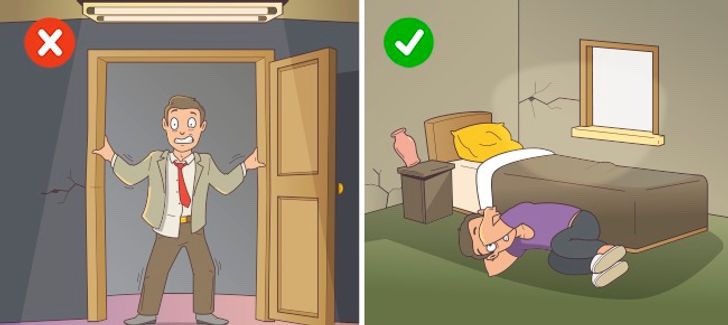
The idea to stand in a doorframe during an earthquake is antiquated* and pretty dangerous as that door is going to be swinging back and forth!! So DO NOT stand in a doorframe during an earthquake – it’s not stronger than any other part of the house. What you do want to do is drop and if there is nothing to get under, get lower than other items, so falling items (including if walls come down) hit the higher furniture before they get to you.
* the doorframe advice came from back when California houses were mostly built out of adobe, and after an earthquake the only thing left standing was the doorframe.
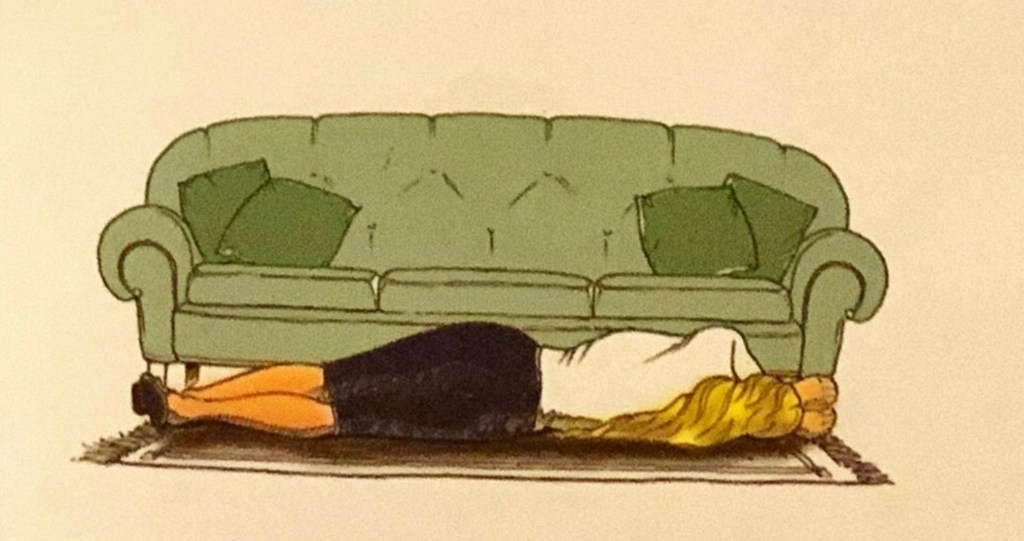
If you are not able to get under an object, don’t try to run to another room to get under an object. Instead get low to the ground next to a larger secure object, like a couch, so falling furniture or walls hit the large object before you. Do not confuse this with the erroneous “triangle of life” earthquake survival technique, which is not recommended. See details here.
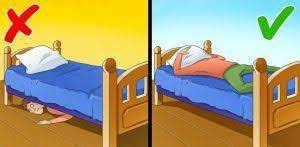
If you are in bed, stay in bed. This is partly due to having bare feet, and partly due to avoiding objects near the bed (like that lamp on your bed stand) falling on you. Protect your head/neck by turning on your tummy and putting a pillow and your hands over the back of your head.
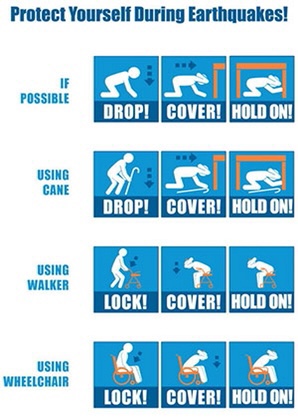
For those using assistive equipment to get around:
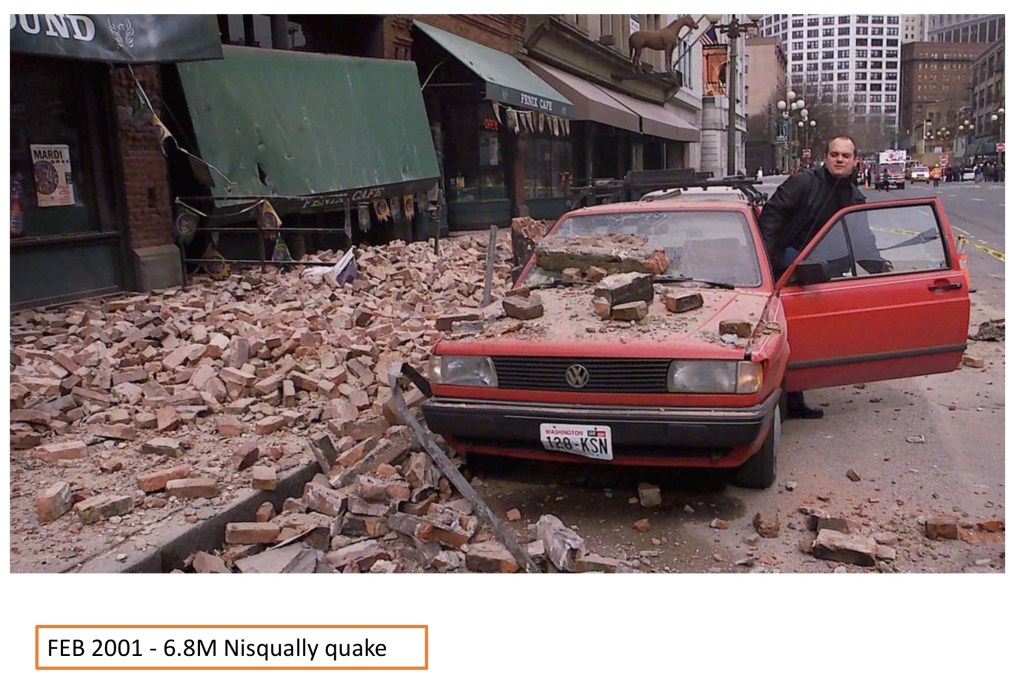
During an earthquake DO NOT run outside. Falling bricks, glass, masonry, and other bits of buildings are very deadly in an earthquake. There is a triangle of danger right outside of a building, so if downtown it may be safer to stay inside after an earthquake. An exception would be if you live in an unreinforced masonry building, such as the older brick buildings in Pioneer Square (see picture below from Nisqually quake). You can find out if you live in or near a unreinforced masonry building on the Seattle Hazard Map. You can find out more about the risks and hazards of unreinforced brick buildings in this excellent Seattle Times article.
If you do have to exit a multi-story building use the stairs, as the elevator may have been damaged in the quake. Most high rises will be stable, and it may be best to stay put after a quake. An in-depth article on Seattle’s high rise earthquake situation can be found in this Seattle Times article.
If you are outside during a quake try to stay away from buildings, trees, and power lines. Get low to the ground and cover your head.
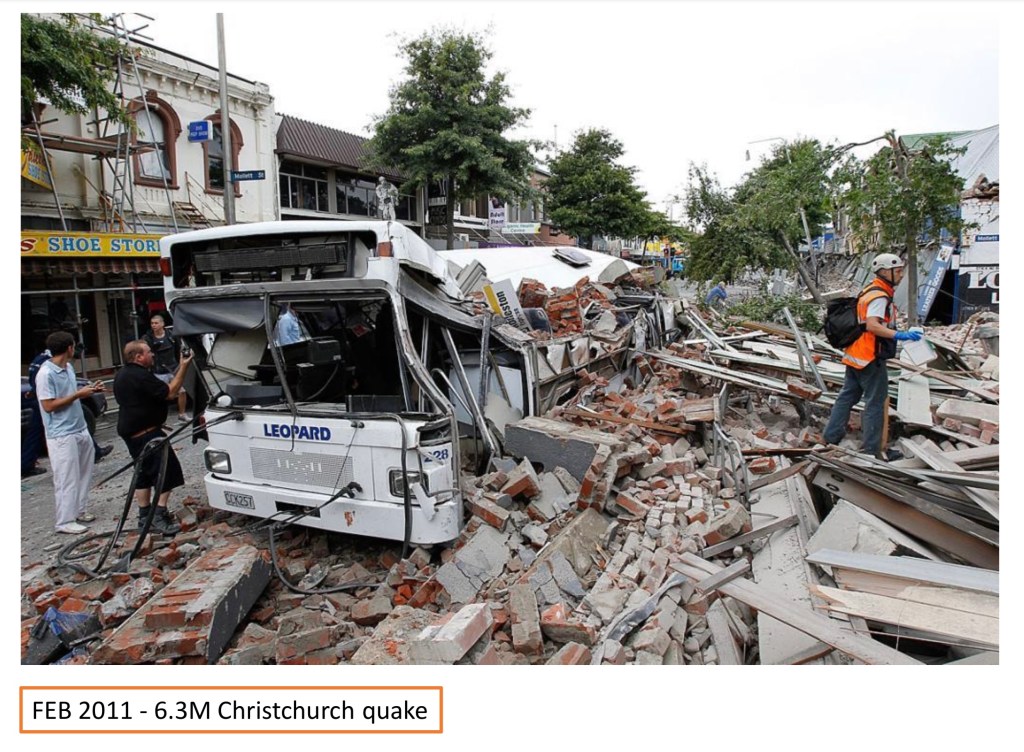
42 people were killed by falling brick in the Christchurch earthquake.
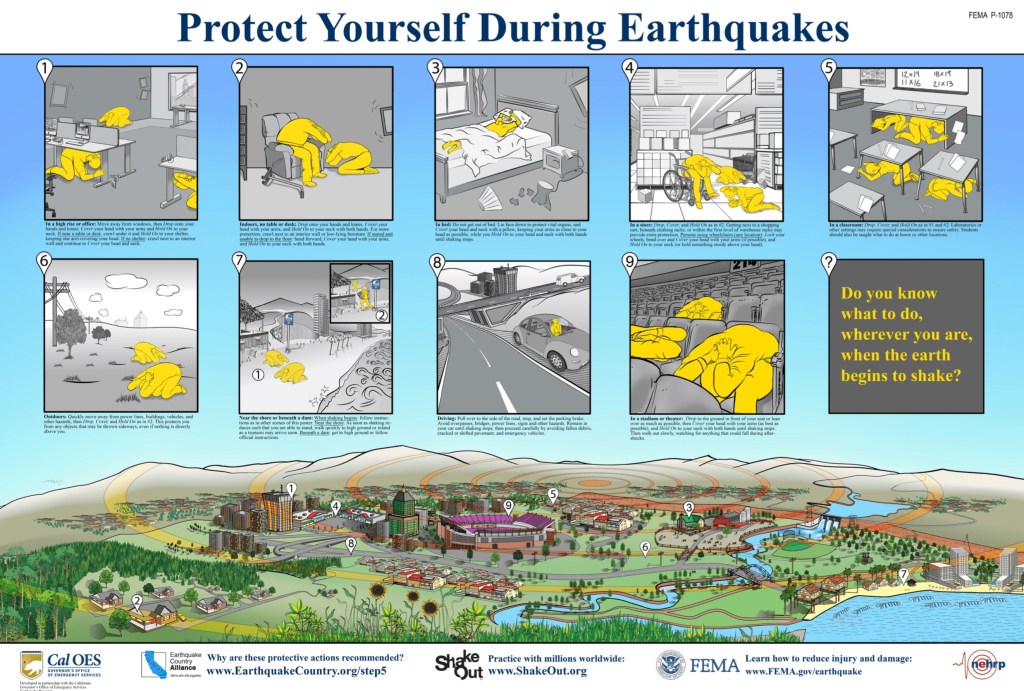
If you are driving and an earthquake happens, pull over and set the parking break. Avoid bridges, overpasses, and tunnels. Be mindful of power lines and signs that might fall on your vehicle.
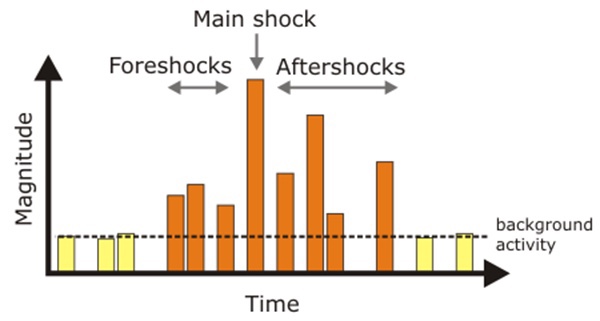
After a major earthquake be prepared for aftershocks.
The next section covers what to do after an earthquake.

 Be Prepared Seattle